- Free Consultation 24/7: (800) 337-7755 Tap Here to Call Us












Who Is at Fault in Florida If You Are Rear-Ended in a Car Accident?


Being rear-ended is one of the most common types of car accidents in Florida. These crashes often happen at stoplights, in heavy traffic, or on highways when vehicles slow suddenly. While many people assume the rear driver is always at fault, Florida law is more nuanced, and liability can depend on the specific facts of the accident.
If you were rear-ended in Florida, understanding how fault is determined can help you protect your rights and avoid mistakes when dealing with insurance companies.
The General Rule in Florida Rear-End Accidents
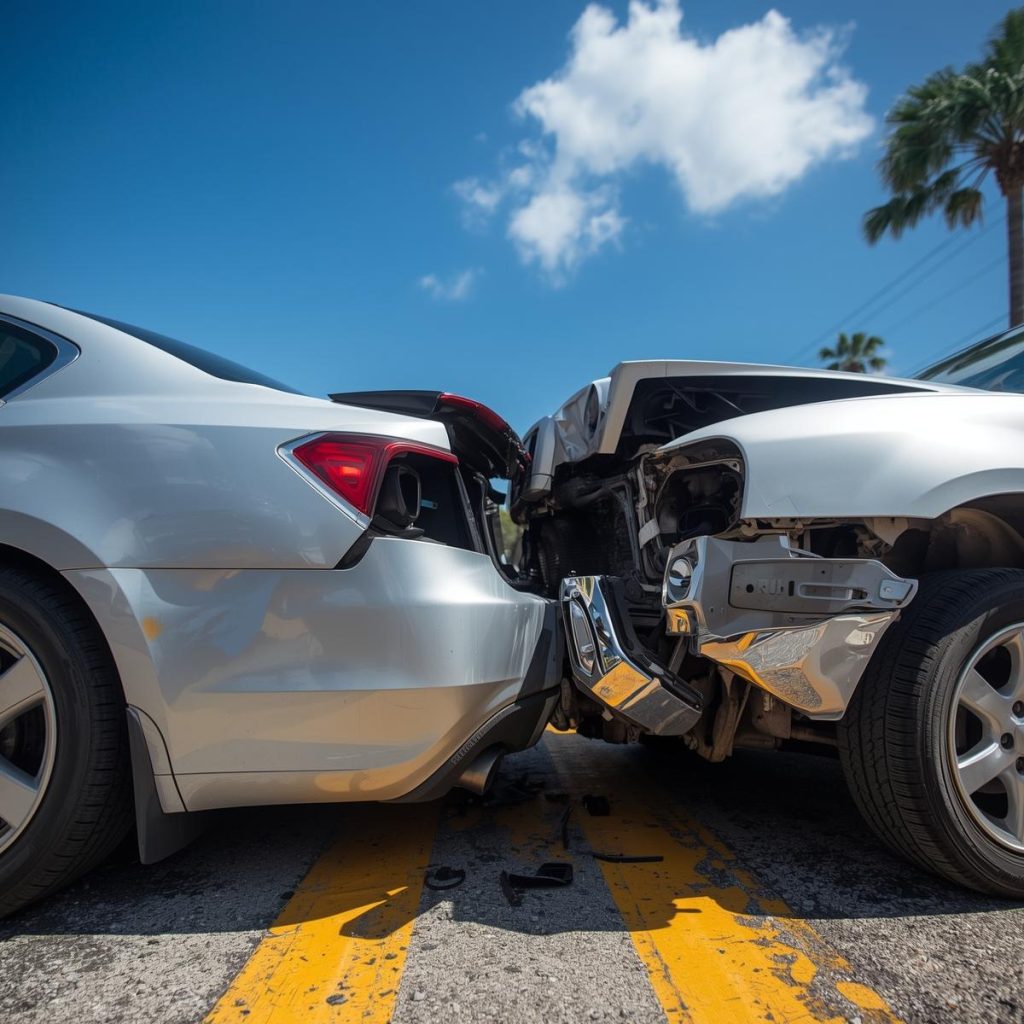
In most Florida rear-end collisions, the driver who strikes the vehicle in front is presumed to be at fault. This presumption exists because drivers are expected to:
- Maintain a safe following distance
- Pay attention to traffic conditions
- Be prepared to stop when traffic slows
Rear drivers who fail to do so are often found negligent.
However, this is a rebuttable presumption, meaning it can be challenged under certain circumstances.
What Does “Rebuttable Presumption” Mean?
A rebuttable presumption means the rear driver is assumed to be at fault unless evidence shows otherwise. The rear driver (or their insurance company) may attempt to shift some or all of the blame by arguing that the front driver contributed to the crash.
This is why rear-end accident cases still require careful investigation.
Situations Where the Front Driver May Share Fault
Although less common, there are situations where the front driver may be partially or even primarily at fault.
Sudden or Unnecessary Braking
If the front driver:
- Slams on the brakes without a valid reason
- Stops abruptly where stopping is unexpected
the rear driver may argue that the sudden stop caused the collision.
Non-Functioning Brake Lights
If the front vehicle’s brake lights were not working:
- The rear driver may not have had adequate warning
- Fault may be shared depending on evidence
Vehicle maintenance issues can play a role in liability.
Illegal or Unsafe Stops
Stopping in:
- Travel lanes
- High-speed roadways
- Areas where stopping is prohibited
may shift some responsibility to the front driver.
Cutting Off Another Vehicle
If the front driver:
- Changes lanes abruptly
- Pulls directly in front of another vehicle without adequate space
a rear-end crash may not be the rear driver’s fault.
Multi-Vehicle Rear-End Collisions
In chain-reaction crashes involving three or more vehicles:
- Fault may be divided among multiple drivers
- Each driver’s actions are evaluated individually
For example, the last vehicle may be responsible for initiating the crash, but intermediate drivers may also share fault depending on spacing and reaction time.
Florida’s Comparative Fault System
Florida follows a comparative fault system. This means:
- More than one party can share fault
- Compensation may be reduced by the injured person’s percentage of fault
For example, if you are found 10% at fault and your damages total $100,000, your recovery may be reduced accordingly.
How Insurance Companies Handle Rear-End Claims
Insurance companies often try to:
- Quickly accept or deny fault
- Minimize payouts
- Argue shared responsibility
Even in rear-end crashes, insurers may look for reasons to dispute liability or downplay injuries, especially soft tissue or neck injuries.
Common Injuries in Rear-End Accidents
Rear-end collisions frequently cause injuries such as:
- Whiplash and neck injuries
- Back injuries and herniated discs
- Shoulder injuries
- Head injuries or concussions
- Aggravation of pre-existing conditions
Symptoms may not appear immediately, which is why medical evaluation is important.
What to Do If You Are Rear-Ended in Florida
If you are involved in a rear-end accident:
- Call law enforcement and request a crash report
- Seek medical attention promptly
- Take photos of vehicle damage and the scene
- Exchange insurance information
- Obtain witness contact details
- Avoid admitting fault at the scene
Early documentation can make a significant difference in a claim.
Do Rear-End Accidents Qualify for Claims Beyond PIP in Florida?
Florida is a no-fault state, meaning your own Personal Injury Protection (PIP) coverage typically pays initial medical expenses regardless of fault.
However, you may be able to pursue a claim against the at-fault driver if:
- Your injuries are serious
- You suffer permanent injury, significant scarring, or loss of bodily function
A legal review can help determine whether stepping outside the no-fault system is appropriate.
Why Fault Disputes May Matter in Rear-End Accidents
Fault affects:
- Which insurance company pays
- How much compensation may be available
- Whether a lawsuit may be pursued
Even when fault seems obvious, disputes can arise especially when injuries are serious or damages are significant.
Why Injured Drivers Contact the Law Offices of Jason Turchin
The Law Offices of Jason Turchin represents Florida drivers who were injured in rear-end collisions and other car accidents.
Our firm can help by:
- Reviewing accident facts and evidence
- Addressing insurance disputes
- Explaining fault and liability under Florida law
- Pursuing compensation when appropriate
Consultations are free, and there are no upfront fees or costs.
Contact the Law Offices of Jason Turchin
If you were rear-ended in a Florida car accident and have questions about fault or your legal options, contact the Law Offices of Jason Turchin for a free consultation.
Phone: (800) 337-7755
Website: Law Offices of Jason Turchin
We can help Florida accident victims understand their rights and next steps after serious crashes.
