- Free Consultation 24/7: (800) 337-7755 Tap Here to Call Us












Can You File a Lawsuit if a Child Drowns in a Retention Pond at a Florida Apartment Complex?


Florida is famous for its beautiful weather and abundant waterways. However, the state also features thousands of man-made lakes and retention ponds, many of which are located directly inside residential apartment complexes, condominium communities, and housing developments. While these bodies of water can look scenic, they often serve a primary functional purpose for stormwater management. Tragically, these same retention ponds can present a hidden and deadly hazard for young children.
Drowning is consistently one of the leading causes of accidental death for children in Florida. When a devastating drowning occurs in an apartment complex lake or retention pond, grieving parents often wonder if they have any legal recourse. The answer may be yes. You may file a wrongful death lawsuit against the apartment complex, property management company, or developers if their negligence or code violations contributed to the tragedy.
At the Law Offices of Jason Turchin, our compassionate Florida wrongful death lawyers have extensive experience handling complex aquatic accidents. We understand the deep emotional trauma families face. If you lost a child in a tragic drowning incident, we can help you uncover the truth, investigate building code violations, and pursue the financial justice your family deserves.
Understanding Premises Liability and Apartment Complex Drownings
Under Florida premises liability law, property owners and apartment complex managers often owe a strict legal duty to keep their premises reasonably safe for tenants and invited guests. This duty may extend to the maintenance and design of man-made lakes, canals, and retention ponds on the property.
Children are naturally drawn to water. Under the legal concept of an attractive nuisance, property owners may be held to an even higher standard of care when they have a dangerous condition on their property that could entice a child to approach. Even if the child was not closely supervised for a brief moment, the property owner cannot always use that as an absolute shield against liability if the pond itself was defectively designed, improperly maintained, or lacked required safety barriers.
If an apartment complex fails to adhere to state engineering standards or local water management codes, their negligence can directly cause a preventable drowning. Our attorneys can investigate these cases to determine exactly how and why a body of water became a death trap.
The 4:1 Slope Law and Florida Retention Pond Safety Standards
One of the most critical elements in a retention pond drowning case is the architectural and engineering design of the pond itself. Man-made lakes in Florida are not designed randomly. They must adhere to strict safety guidelines to protect the public.
A central safety standard in Florida is commonly known as the 4:1 slope rule. This engineering guideline dictates that the underwater slope of a retention pond must be gradual. Specifically, for every four feet of horizontal distance into the water, the depth of the pond may drop by a maximum of one foot. This 4:1 ratio ensures a gentle, highly walkable incline.
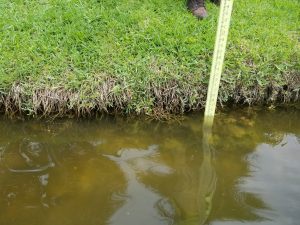
The purpose of the 4:1 slope requirement is for human safety. If a toddler wanders near the edge of a pond and slips into the water, a 4:1 slope allows the child to easily crawl or wade back out to the grassy bank. The gradual incline prevents sudden, terrifying drop-offs.
If a developer or apartment complex designs a pond with a steeper slope, such as a 2:1 or 3:1 ratio, the drop-off becomes incredibly dangerous. A steep slope acts like a slippery slide. If a child falls in, the steep underwater mud, wet grass, and algae can make it physically impossible for them to gain traction and climb out. Under Florida safety guidelines, if a retention pond features a slope steeper than 4:1, the property owner is generally required to install a physical barrier, such as a fence, to prevent children from accessing the water. Failing to maintain a safe slope or failing to install a fence around a steep pond can be strong evidence of negligence in a wrongful death lawsuit.
When thinking about a proper slope, consider what a beach looks like and how a child can walk down a smooth slant into the water. If the child walks too far, it is easier to get the child back or for the child to walk out. If there were a drop off, that would likely be far more dangerous. A similar concept exists in many apartment complexes where it is much safer to have a slope than a drop off, especially where kids may be present.
South Florida Water Management District (SFWMD) Codes and Drownings
In addition to general engineering standards, retention ponds in regions like Miami, Fort Lauderdale, Palm Beach, and Orlando must comply with strict local administrative codes. The South Florida Water Management District (SFWMD) oversees the permitting, construction, and maintenance of stormwater management systems across the southern half of the state.
SFWMD codes mandate specific design criteria to ensure that these functional bodies of water do not pose an unreasonable threat to public safety. When a developer builds an apartment complex, they must typically submit environmental resource permits (ERP) to the SFWMD. These permits outline exactly how the retention pond must be graded, where littoral zones (shallow areas with aquatic plants) must be planted, and what safety features must be included.
Unfortunately, many apartment complexes allow their retention ponds to degrade over time. Heavy Florida rainstorms can cause severe soil erosion along the banks of the lake. A pond that originally met SFWMD codes upon construction might erode into a steep, dangerous drop-off after a few years of neglect. Property management companies have a legal duty to conduct routine inspections and repair eroded banks. If an investigation reveals that an apartment complex ignored SFWMD maintenance codes and allowed a pond to become hazardous, they could face significant civil liability for a resulting drowning.
Our Experience: Litigating Apartment Complex Lake Drowning Cases
Handling a child drowning case often requires immense legal skill, financial resources, and a deep understanding of aquatic engineering. The Law Offices of Jason Turchin has direct, hands-on experience litigating tragic cases involving children who drowned in apartment complex lakes.
In one of our past representative cases, a young child tragically drowned in a man-made lake located within their family’s apartment complex. The property management company initially tried to blame the parents for a momentary lapse in supervision, claiming the lake was a natural hazard that required no special warnings.
Our legal team immediately launched a massive forensic investigation. We retained expert land surveyors and engineers to map the underwater topography of the retention pond. Our experts discovered that the underwater slope of the lake severely violated the 4:1 safety standard. Instead of a gradual incline, the lake featured a sheer, slippery drop-off hidden just beneath the surface of the murky water.
Furthermore, our investigation into the local water management district records revealed that the apartment complex had failed to maintain the original permitted design. Rampant soil erosion had eaten away at the shoreline, and the complex had failed to install any fencing or safety barriers despite the known steepness of the banks. By proving that the property owner violated safety codes and created an underwater trap, we were able to litigate the case and help the grieving family seek the justice and financial accountability they deserved.
Who May Be Held Liable for a Retention Pond Drowning?
A comprehensive drowning investigation often reveals that multiple corporate entities share the blame for a dangerous body of water. Depending on the specific facts of the case, our attorneys may pursue Florida wrongful death claims against several parties.
- Apartment Complex Owners: The primary corporate entity that owns the residential property holds the ultimate duty to ensure the premises are safe for tenants.
- Property Management Companies: The company hired to oversee day-to-day operations can be liable for failing to inspect the pond, ignoring erosion, or failing to erect warning signs and fences.
- Landscaping and Maintenance Contractors: Landscapers who improperly edge the grass along the water or use heavy machinery that degrades the shoreline may contribute to dangerous erosion.
- Architects and Engineers: If the pond was built and inherently featured a defective, overly steep design that violated the 4:1 slope rule, the original developers and engineers might be held accountable.
- Homeowners Associations (HOAs): In condominium communities, the HOA board may be responsible for maintaining common elements like community lakes and ensuring safety compliance.
Compensation in a Florida Child Drowning Lawsuit
No amount of money can ever replace the loss of a child. However, a successful wrongful death lawsuit in Florida can provide a family with the financial support they need to navigate the grieving process, while also forcing the negligent apartment complex to change their safety practices so no other family has to suffer the same fate.
Under the Florida Wrongful Death Act, eligible surviving parents may recover compensation for a variety of damages. This can include reimbursement for all medical and emergency transport bills incurred prior to passing, as well as complete coverage for funeral and burial expenses. Most importantly, Florida law allows parents to recover substantial non-economic damages for the profound mental pain, emotional suffering, and loss of companionship resulting from the untimely death of their child.
How to Protect Your Legal Rights After a Tragic Drowning
If your family has experienced a drowning tragedy at an apartment complex, the steps you take can significantly impact your future legal claim. First, you should report the incident to local law enforcement and insist on a full investigation. Second, you may want to photograph the exact area where the child entered the water, paying close attention to the steepness of the bank, the presence of slippery mud or algae, and the lack of any fences or warning signs.
Most importantly, you should contact an experienced Florida drowning accident lawyer as soon as possible. Property management companies may attempt to quickly alter the scene, fill in eroded areas, or erect fences after a tragedy occurs. A lawyer can send a formal spoliation letter ordering the complex to preserve the scene exactly as it was on the day of the incident, and they can immediately deploy engineering experts to measure the slope before evidence is destroyed.
Frequently Asked Questions (FAQs)
Yes, you may be able to file a wrongful death lawsuit against your apartment complex if their negligence contributed to the drowning. This often involves proving that the lake had a dangerously steep slope, lacked required fencing, or violated local water management safety codes.
The 4:1 slope rule is an engineering safety standard requiring the underwater edges of a man-made pond to drop no more than one foot in depth for every four feet of horizontal distance. This gradual incline allows a person who falls in to safely crawl out. If a pond is steeper than this ratio, it may require physical barriers like a fence.
Insurance companies frequently use the defense of negligent supervision to avoid paying claims. However, Florida law recognizes that brief lapses in supervision can happen. If the property owner maintained an illegally steep pond or violated SFWMD codes, their comparative negligence could still allow you to recover substantial financial damages.
Under updated Florida laws, surviving family members generally have only two years from the date of the tragic incident to file a formal wrongful death lawsuit. Missing this strict statute of limitations could permanently bar you from seeking justice in court.
Our firm handles all personal injury and wrongful death cases on a strict contingency fee basis. This means you pay absolutely no upfront costs or out-of-pocket fees. We can advance the money needed to hire aquatic engineers and investigate the scene. You only pay an attorney fee and costs if we successfully recover financial compensation for your family.
Contact Our Florida Wrongful Death Lawyers Today
Losing a child to a preventable drowning is an unimaginable nightmare. You do not have to fight the apartment complex and their corporate insurance company alone. Contact the Law Offices of Jason Turchin today at (800) 337-7755 for a free, fully confidential consultation. We can represent grieving families across Miami, Fort Lauderdale, Orlando, Tampa, and throughout the entire state of Florida. Our compassionate legal team is available 24/7 to help you seek answers, justice, and accountability.
