
Let Us Fight for
Your Rights!
Your Rights!











Train travel is often viewed as a safe and efficient way to commute, especially in densely populated regions. However, when train accidents occur, they can result in devastating injuries, significant property damage, and long-term consequences for passengers, railroad workers, and nearby motorists.
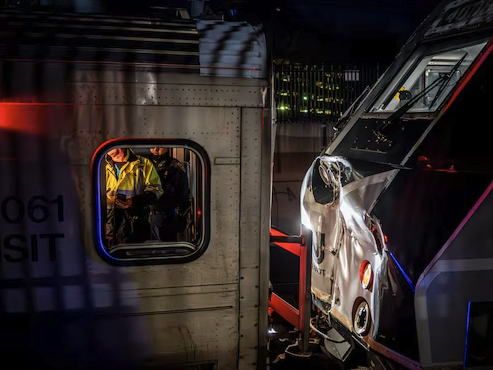
A recent train collision involving NJ Transit in New Jersey highlights the risks that can arise when something goes wrong on the rails. According to news reports, two NJ Transit trains collided in Montclair, prompting emergency response efforts and raising serious questions about rail safety, operational oversight, and accountability.
If you or a loved one were injured in a train accident, the Law Offices of Jason Turchin may be able to help you understand your legal options and pursue compensation.
Train accidents are not limited to dramatic derailments. Many serious injuries occur during incidents such as:
Unlike car accidents, train crashes often involve multiple victims, complex investigations, and powerful corporate or government entities.
The recent Montclair incident involved NJ Transit commuter trains colliding during service in Montclair. Emergency responders were dispatched, and passengers were evacuated as authorities worked to assess injuries and damage.
While investigations are ongoing, train collisions of this nature often raise questions about:
Even at lower speeds, train collisions can cause serious injuries due to the force involved and the confined nature of passenger cars.
Trains are heavy, fast-moving vehicles that cannot stop quickly. When an accident occurs, passengers may be thrown forward, sideways, or into fixed objects inside the train.
Common contributing factors include:
These conditions can make even a non-derailment collision dangerous.
Victims of train accidents may suffer a wide range of injuries, including:
Some injuries may not be immediately obvious and can worsen days or weeks after the accident.
Passengers are standing during rush hour when two trains collide. Several passengers are thrown into poles or seats, resulting in head and back injuries.
A train makes an abrupt stop to avoid a collision. Standing passengers fall, suffering fractures and sprains.
After a collision, passengers exiting the train trip over debris or damaged flooring, leading to additional injuries.
Rail employees working onboard or near the tracks suffer injuries during a collision or derailment.
Each scenario may involve different legal considerations and responsible parties.
Train accident claims can involve multiple potentially responsible parties, including:
Because many commuter rail systems are operated by public entities, claims may involve special notice requirements and shorter deadlines than typical injury cases.
Passengers injured in train accidents may be able to pursue claims for:
In some cases, claims may be brought under:
Determining which laws apply requires careful legal analysis.
Train accident cases are often more complex than standard car accidents because they may involve:
Evidence such as event recorders, signal data, and maintenance logs can play a critical role in determining fault.
If you were injured in a train accident, consider taking the following steps:
Acting early can help preserve important evidence and protect your rights.
Compensation in train accident cases may include:
Each case depends on the severity of injuries and available evidence.
The Law Offices of Jason Turchin can represent individuals injured in serious transportation accidents, including train and rail incidents. Our firm can help clients navigate complex claims involving public transit authorities and large transportation systems.
We can help by:
There are no upfront fees or costs, and clients only pay if compensation is recovered.
Can I file a claim if the train operator is a government agency?
Yes, but special rules and deadlines may apply.
What if I was standing on the train?
Standing passengers may still have valid claims if injured.
Do I need proof of negligence?
Many claims require showing fault, which may involve technical evidence.
How long do I have to file a claim?
Deadlines vary and may be shorter for public entities.
If you or a loved one were injured in a train accident or rail collision, contact the Law Offices of Jason Turchin for a free consultation.
Phone: (800) 337-7755
Website: https://www.jasonturchin.com/
We can help injured passengers, commuters, and workers pursue accountability after serious train accidents.
