
Let Us Fight for
Your Rights!
Your Rights!











Our Florida dog bite lawyers have handled many injury claims for children and adults bitten by a dog. See if we can help with your case. A sudden, violent dog attack can be one of the most terrifying experiences a person or child can endure. In a matter of seconds, an aggressive dog can inflict deep puncture wounds, torn muscle tissue, severed nerves, permanent facial scarring, and profound psychological trauma. Victims are often left facing urgent emergency room visits, complex reconstructive surgeries, rabies risk protocols, lost wages, and compounding medical bills.
Navigating a dog bite claim in Florida often requires far more than just filling out insurance paperwork. It may demand a deep, technical understanding of Florida’s strict liability statutes, complex insurance policy exclusions, third-party liability frameworks (such as landlord and HOA negligence), and the strict court approval processes required when a child is injured.
At the Law Offices of Jason Turchin, our top rated Florida personal injury lawyers have handled thousands of injury claims across the Sunshine State. Having handled more than 6,500 accident cases, our firm possesses the deep financial capital, forensic medical networks, and aggressive litigation experience which may be needed to uncover every available layer of insurance coverage and fight for the maximum compensation you and your family deserve.
👉 Call us 24/7 at (800) 337-7755 or use our live chat for a free, strictly confidential case evaluation. We handle all dog bite lawsuits on a strict contingency fee basis, meaning you pay zero upfront fees or costs, and we only collect a fee if we successfully recover financial compensation for you.
In many states, dog bite victims must prove the “one-bite rule”, meaning they have to show that the dog’s owner knew or should have known that the animal possessed aggressive propensities before the attack occurred. Florida does not follow the one-bite rule.
Under Florida Statute § 767.04, Florida is a Strict Liability state regarding dog bites. This statutory provision generally holds the owner of any dog strictly liable for damages inflicted on a person who is bitten, regardless of the former viciousness of the dog or the owner’s knowledge of such viciousness. The law protects victims who are bitten while in a public place or lawfully in a private place, including the property of the dog owner.
While Florida Statute § 767.04 establishes strict liability, insurance defense lawyers frequently attempt to exploit statutory exceptions to reduce or eliminate the owner’s financial accountability:
What happens if a large, aggressive dog does not bite you, but instead lunges, jumps on you, chases you into traffic, or knocks you down, causing a broken hip, torn ACL, or traumatic brain injury? Florida Statute § 767.01 provides that “Owners of dogs shall be liable for any damage done by their dogs to a person…” This statutory rule generally extends strict liability beyond physical bite punctures to include knockdowns, falls, and injuries caused when an unrestrained dog frightens or physically strikes a pedestrian, cyclist, or child.
Securing a massive verdict against an individual dog owner may be meaningless if that individual has no personal assets and no insurance policy. The true work of a Florida dog bite lawyer may involve meticulously identifying, stacking, and litigating all potential insurance policies that cover the attack. It can be difficult at times to get insurance coverage in dog bite cases in Florida because of exclusions.
The primary source of recovery in most dog bite cases is the dog owner’s homeowners insurance policy. Standard homeowners liability limits typically range from $100,000 to $300,000 or $500,000. However, major insurance carriers frequently insert “Animal Liability Exclusions” or specific “Breed Exclusions” into their policies.
Carriers often explicitly exclude coverage for specific breeds deemed “high risk,” such as Pit Bulls, Rottweilers, Doberman Pinschers, German Shepherds, Akitas, or Chow Chows. Our legal team meticulously reviews the complete, unredacted insurance policy declaration sheets and endorsements. Even if a specific animal liability endorsement is excluded, we can investigate whether the homeowner failed to secure the animal properly under broader negligence theories that may trigger general liability coverage.
A huge percentage of dog owners in Florida rent their homes, apartments, or condominiums. Many landlords mandate that tenants carry renters insurance. Renters insurance policies routinely contain personal liability coverage that follows the tenant and their pet, covering dog bite incidents that occur both inside the rented residence and off-premises (such as at a public park or sidewalk). We can issue immediate formal insurance disclosure demands under Florida Statute § 627.4137 to force renters insurance carriers to reveal policy limits under oath.
When a dog bite results in catastrophic injuries, such as permanent facial disfigurement, limb amputation, nerve destruction, or death, a standard $100,000 homeowners policy is rarely enough to cover lifetime medical care and non-economic damages. In these high-stakes cases, we search for underlying Umbrella or Excess Liability Policies. Umbrella coverage provides additional liability limits (often $1,000,000 to $5,000,000+) that sit above primary homeowners or automobile policies, providing a substantial pool of financial recovery for severe trauma.
If a dog attack occurs on commercial property, such as inside a retail store, at a outdoor restaurant patio, inside an auto repair shop, or within a pet-friendly hotel, the business owner’s Commercial General Liability (CGL) policy generally comes into play. CGL policies often feature multi-million dollar liability limits and cover injuries caused by a business owner’s failure to maintain a safe environment for invitees, unless exception applies.
Children are disproportionately the victims of severe dog attacks. Due to their small stature, children are typically bitten around the face, head, neck, and throat. The physical and emotional fallout for a young child is immense, often requiring immediate plastic surgery, complex scar revision, and long-term psychological intervention to treat Post-Traumatic Stress Disorder (PTSD) and severe night terrors.
Facial scars on a growing child change over time. Pediatric plastic surgeons frequently recommend delaying definitive scar revision surgeries until the child reaches physical maturity or undergoes growth spurts. When negotiating a settlement for a child, our attorneys can work alongside board-certified pediatric plastic surgeons and life care planners to project the exact future costs of multi-stage laser treatments, keloid excision surgeries, and specialized scar compression therapies necessary throughout the child’s adolescent years.
To protect minors from predatory practices or mismanagement of funds, Florida generally enforces strict statutory frameworks governing how a child’s personal injury settlement must be handled and approved by a circuit court judge:
To satisfy court requirements and safeguard a child’s financial future, victims may utilize Structured Settlements. Instead of placing a large lump sum of cash into a bank account where it may sit until the child turns 18, the settlement funds may be placed into an annuity backed by top-rated life insurance companies.
Under Internal Revenue Code Section 104(a)(2), all growth and interest compounding within a personal injury structured settlement annuity is typically 100% tax-free. The annuity can be customized to distribute guaranteed payments to the child at key life milestones, such as college tuition payouts at age 18, 19, 20, and 21, followed by lump-sum cash distributions at ages 25 and 30. This can help ensure the funds are protected from early dissipation and grow tax-free over time.
Learn more about how our firm protects injured families by visiting our comprehensive personal injury victim resources.
Every dog attack scenario could involve unique legal theories, factual investigations, and insurance structures. Our law firm actively represents victims across a wide range of attack categories:
High-velocity bites from powerful breeds can cause crushing fractures to facial bones, torn ear cartilage, severed facial nerves (leading to paralysis), and permanent avulsion injuries where tissue is completely torn away. We can work alongside plastic surgeons and neurologists to fully document the anatomical destruction and future surgical needs of the victim.
An unleashed or poorly controlled dog that runs into a pedestrian, jumps on an elderly person, or trips a jogger can cause devastating orthopedic injuries without ever sinking its teeth into the victim’s skin. We can represent clients who suffer fractured hips, broken shoulders, and traumatic brain injuries after being violently knocked to the pavement by an off-leash dog.
Many hardware stores, outdoor shopping malls, coffee shop patios, and hotel chains now market themselves as “pet-friendly.” However, allowing customers to bring unvetted dogs into crowded commercial spaces creates a severe hazard. If a business owner allows a dangerous or agitated dog to remain on their commercial premises and a customer is bitten, the business can be held liable under premises liability laws for failing to maintain a safe environment.
Apartment complex common areas, dog parks, elevators, and hallways are frequent sites of aggressive dog encounters. When an apartment tenant owns a vicious dog that attacks another resident, both the tenant and the landlord or property management company may face legal liability.
Amazon drivers, UPS couriers, USPS postal workers, utility contractors, and food delivery drivers face daily risks from unmanaged dogs. Homeowners who order goods or services owe an explicit duty to invitees to secure their animals. If a delivery worker is bitten or chased on a property, we can file third-party personal injury lawsuits against the homeowner in addition to helping them navigate any underlying workers’ compensation claims.
If an attack tragically results in a fatal injury, our firm can work alongside surviving family members to pursue justice through a formal Florida wrongful death claim.
Identifying all potentially liable defendants can be the cornerstone of securing full financial recovery. Depending on where and how the attack occurred, our attorneys can pursue claims against:
Under F.S. § 767.04, the dog owner is the primary strictly liable party. Their personal homeowners or renters insurance policy provides the initial line of financial recovery.
In Florida, among other possible arguments, a landlord can be held legally liable for a tenant’s aggressive dog if:
HOA and Condominium Associations govern common areas like walkways, clubhouses, and community dog parks. If an HOA board is fully aware that a resident is housing a dangerous, aggressive breed in direct violation of the community’s governing declarations and bylaws, but fails to take action or enforce leash rules in common elements, the association itself can be sued for negligence if that dog attacks a visitor or resident in a common area.
If an employee brings an aggressive dog to a workplace or commercial job site and the dog bites a customer, contractor, or visitor, the employer can be held vicariously liable for the actions of their employee under the doctrine of respondeat superior, as well as directly liable for negligent supervision of the premises.
For more information on corporate and property liability, explore our resources at VictimAid.com.
The steps you take immediately following a dog attack can be vital to protecting your health and preserving key evidence for your legal claim:
When you or your child are suffering from the trauma of a dog attack, you should look for an attorney experienced in handling dog bite cases. You may want an aggressive, nationally recognized litigator who knows how to hold insurance companies accountable.
Founding Attorney Jason Turchin has handled more than 6,500 personal injury and accident claims. He is AV Preeminent® Rated by his peers on Martindale-Hubbell, representing the highest standard of legal ability and ethics. Our firm also has experience with probate and guardianship matters, allowing us to seamlessly manage court approvals for child settlements.
Our law firm can represent dog bite victims and injured families in every county and municipality across Florida. We actively accept cases in:
Under Florida law, if a minor child receives a gross settlement of $15,000 or more, the settlement must be formally approved by a circuit court judge under F.S. § 744.387, often requiring a Guardian ad Litem report. If the net payout to the child exceeds $50,000, Florida Statute § 744.301 mandates that a formal Guardianship of the Property be opened, placing the funds into a restricted account or a structured settlement annuity until the child turns 18.
Yes. This is an extremely common scenario. It is important to understand that you are not trying to take money out of your friend or family member’s personal bank account. Your attorney is filing a claim against their homeowners or renters insurance policy. Insurance is specifically purchased to pay for unexpected accidents, medical bills, and trauma caused on or off the property.
We can check to see if the tenant carries renters insurance, which frequently includes personal liability coverage for dog bites. Additionally, we can investigate whether the landlord or property management company had actual knowledge that the tenant was housing a dangerous dog on the property, creating potential third-party landlord liability.
Under Florida’s updated tort laws, you generally have only two (2) years from the exact date of the dog attack to file a formal personal injury lawsuit. Missing this statutory deadline can permanently bar you from seeking compensation in court. Contact a lawyer immediately so evidence can be preserved.
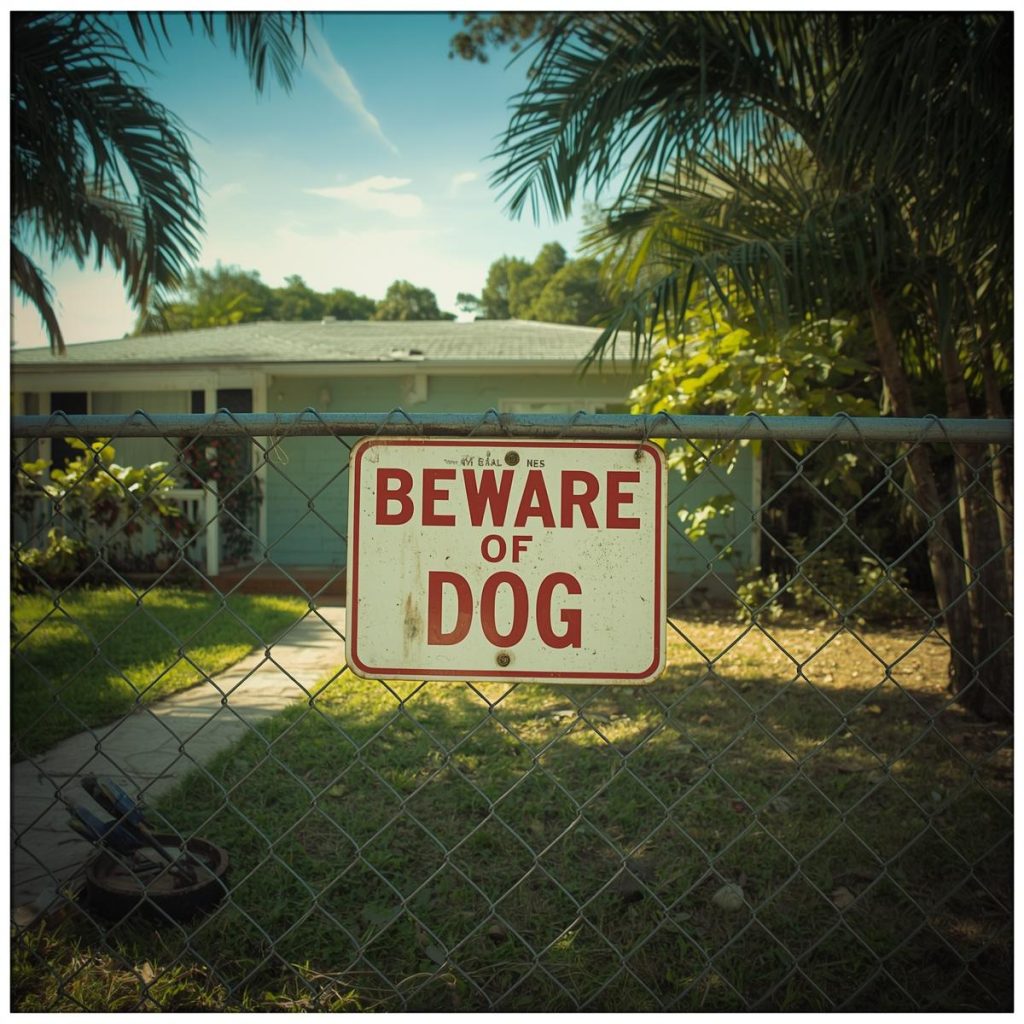
Not necessarily. Under Florida Statute § 767.04, a posted ‘Bad Dog’ or ‘Beware of Dog’ sign can reduce or eliminate liability in certain scenarios, BUT it does NOT apply if the victim is under six (6) years of age. Furthermore, a sign does not protect an owner if they acted negligently or if the injury occurred off their property.
Do not let an insurance adjuster dictate your physical and financial recovery after a dangerous animal attack. Contact the Law Offices of Jason Turchin today at (800) 337-7755 to speak directly with an experienced Florida dog bite lawyer. Our legal team is available 24/7, including after hours and on weekends, to protect your rights and help you secure the maximum financial compensation you are legally owed.
